
Resources
A small list. Some books that shaped how I think about the editing — the versions we perform, what we edit, and the relief of naming it.
Rooms worth being in.
Some support worth knowing about.
[Books]
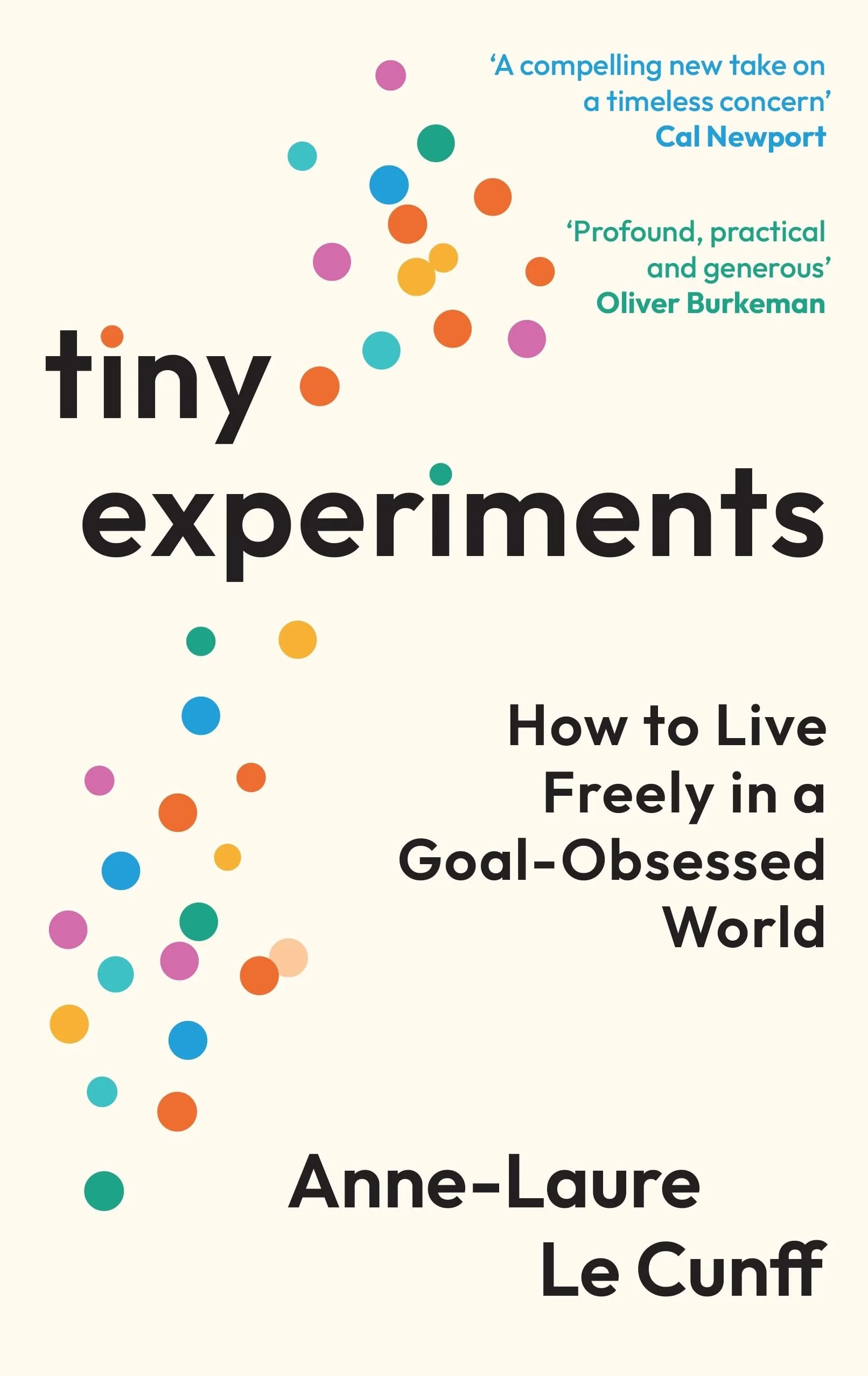
Tiny Experiments: How to Live Freely in a Goal-Obsessed World by Anne-Laure Le Cunff
Le Cunff is a neuroscientist and former Google strategist. The argument I keep returning to: rigid goals tie identity too tightly to outcomes.
Small experiments give you room to be a different version of yourself before you commit to it.
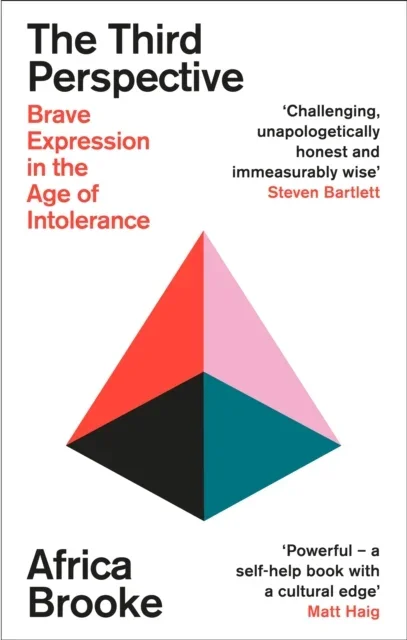
The Third Perspective by Africa Brooke
About self-censorship and the cost of refusing to think for yourself in public.
Brooke writes about why people stop saying what they actually think — and what it keeps costing them to keep doing it.
Unmasking Autism: Discovering the New Faces of Neurodivergence by Devon Price
Price is a social psychologist who writes about masking — the active suppression of self required to seem neurotypical.
I have always written and formatted my work with neurodivergent readers in mind; this book gave me language for why. The pattern Price describes is the same as the editing framework. The cost is heavier.

Missing Out: In Praise of the Unlived Life by Adam Phillips
Phillips is a psychoanalyst and essayist. The book is about the lives we do not lead — the parts of ourselves we edit out, the versions we do not become.
Short, layered, and one I have returned to for years.

[Rooms worth being in]
The page only goes so far. Reading and writing about yourself can name what you have been carrying. What it can’t do is replace the rooms of people who know you whole. The rooms you actually need are offline. The internet simulates connection; it does not produce it.
Finding one is part of the work. If you’re looking for one: small is better than big. Specific is better than general. A room built around a shared question, a shared craft, or a shared text holds more than a room built around the idea of connection itself.
What to look for:
Real-world where it’s possible. The internet is poor at the kind of connection you actually need.
Common ground worth standing on. A shared craft, a shared question, a shared text. The connection comes through it, not before it.
People who challenge each other, not just affirm each other. Affirmation alone gets boring fast.
Held by someone who is still doing the work themselves, not packaging it for sale.
What to walk past:
Anything that requires a high upfront payment to join.
Anything that calls itself a tribe.
Anything that promises transformation as part of joining.
A few rooms worth starting with:
Music
Sofar Sounds Intimate live music gigs in cities worldwide — small audiences of fifty to a hundred people, hosted in living rooms, galleries, and unusual spaces. The audience comes for the music; conversation happens afterwards because everyone has just had the same hour. Operates in hundreds of cities globally. Tickets are modest.
A community choir. Most cities have one — secular choirs, gospel choirs, rock choirs. Free or low-cost to join, often no audition. Singing in a room with other people does something to the body that talking doesn’t. The room is built around the music; the connection comes through it.
Art
Art Fund National Art Pass An annual membership in the UK that gives free or discounted entry to 800+ museums, galleries, and historic sites. About eighty-five pounds a year. One pass replaces dozens of individual memberships, which means the museum trip becomes a regular default rather than a special-occasion expense. Regular calendar of members' events — lectures, late openings, curator talks. The room is not built for connection, which is why it works. People who came because they care about the same thing are easier to be near than people who came to network. Whichever city you live in, the equivalent — a museum, an archive, a botanic garden you actually return to — does the same work.
Urban Sketchers A worldwide network of people who sketch in their cities — public squares, cafés, train stations, museums. Free to join; many local chapters meet weekly to sketch together, often in silence, then share what they made over a coffee afterwards. The craft is the room. The silence is the company.
Movement
Parkrun A free 5km run every Saturday morning, in over 2,000 locations across more than 20 countries. You walk, run, jog — whatever you can do that day. Volunteers time everyone, including the walkers. The community at any given parkrun is wider than almost any other room you will ever be in: seventy-five-year-olds, prams, athletes, beginners, regular walkers. Showing up is the membership.
The Ramblers The UK's largest walking community, with hundreds of local groups running guided walks every week — short evening strolls to all-day hikes. Membership is modest; many walks are open to non-members as a trial. The shared activity is walking; the conversation happens because no one has anywhere else to be for the next two hours.
The Outdoor Swimming Society A growing community of cold-water and wild swimmers, with directories of swimming spots, group swims, and seasonal events. Open-water swimming is one of the few activities where the discomfort itself becomes the shared room — nobody who has just got out of cold water is performing.
[If you need support now]
Books and rooms are for the slow work. If you need help today, here are places to start.
If you’re in immediate distress:
Samaritans (UK) — 116 123 — free, confidential, 24 hours
The Mix (UK)— Essential support for under 25s — text SHOUT to 85258 — free, confidential, 24 hours
Outside the UK — your local crisis line or emergency services.
If you’re looking for a therapist In the UK, the three major regulators hold public directories of registered practitioners:
Outside the UK, your national psychological or counselling association will have a similar register. Psychology Today's international therapist directory is a reasonable starting point.
A note: I don’t recommend BetterHelp or similar large direct-to-consumer therapy platforms. The therapist directories above are slower but produce better matches and operate under clear regulatory oversight.
Last reviewed: June 2026